
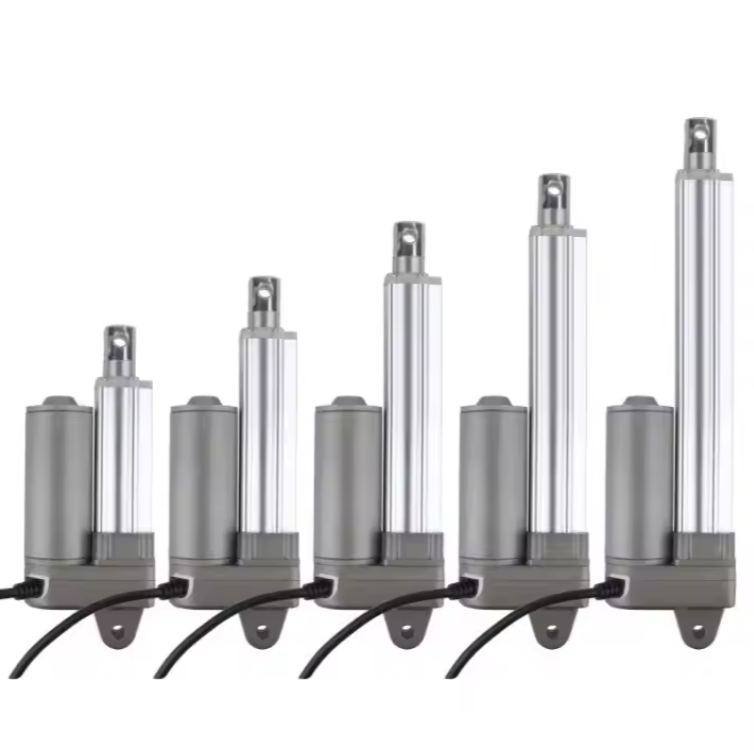
In the world of modern technology, the term "micro motor" is becoming increasingly significant. These miniature powerhouses, often no larger than a coin, are transforming a wide range of industries with their ability to deliver power and precision in compact forms. Despite their small size, micro motors pack a punch, offering versatility and performance in applications ranging from medical devices to consumer electronics. Understanding the potential of micro motors is key to appreciating how they contribute to innovation across multiple sectors.
What Are Micro Motors?
Micro motors are tiny electrical motors designed to perform specific tasks with high efficiency, often in applications where space constraints or weight limitations are a concern. Typically, they are defined as motors with a diameter of less than 1 inch (25mm) and a power output of a few watts or less. These motors operate similarly to larger counterparts but are optimized for smaller, more precise applications. They are made using specialized materials, including rare-earth magnets, high-strength alloys, and advanced coils, which help maximize efficiency while minimizing size.
Applications in Medical Technology
One of the most impactful applications of micro motors is in the medical field. Micro motors are used in medical devices such as surgical tools, pumps, and diagnostic equipment. For instance, Linear Actuator Motor are crucial in minimally invasive surgeries, where they power small robotic arms or endoscopic devices, allowing for precise movements in tight spaces. These motors provide the necessary torque and speed to operate without compromising on the level of control required for delicate procedures. Additionally, micro motors are used in dental drills, infusion pumps, and hearing aids, helping to improve the functionality and portability of these devices.
The benefits of micro motors in medical technology are not limited to their small size. They also enhance the overall performance of medical devices by providing smoother, more efficient operation. With advancements in materials and design, these motors are becoming more reliable, quieter, and longer-lasting, making them essential for modern healthcare.
Consumer Electronics and Smart Devices
In the consumer electronics sector, micro motors play a significant role in powering everything from smartphones to wearables and robotics. In smartphones, micro motors are used in features such as haptic feedback systems, where the motor generates vibrations to enhance user interaction. Additionally, micro motors power tiny components like autofocus mechanisms in cameras or the vibration functions in smartwatches.
The potential of micro motors is particularly evident in the rapidly evolving field of robotics. Miniaturized robots, such as drones or robotic vacuum cleaners, rely heavily on micro motors for propulsion, movement, and sensor control. These motors offer a high degree of precision, enabling the robots to navigate complex environments, carry out tasks, or deliver services efficiently.
Advancements and Innovations
Recent advancements in micro motor technology have unlocked new possibilities. One key development is the integration of advanced materials like carbon nanotubes and high-performance polymers, which reduce the motor's weight while improving efficiency and durability. Additionally, the development of brushless micro motors has eliminated the friction and wear associated with traditional brushed designs, leading to more reliable and longer-lasting performance.
Another exciting trend is the evolution of smart micro motors that can be remotely controlled or adjusted. These motors are being integrated into Internet of Things (IoT) devices, providing greater automation, control, and customization. For instance, in smart homes, micro motors might be used in automated window shades or adjustable furniture, enhancing convenience and energy efficiency.
Challenges and the Future
Despite their impressive capabilities, micro motors still face challenges, such as cost, heat dissipation, and limitations in power output. Manufacturers continue to refine the technology to overcome these hurdles, seeking ways to make micro motors even more efficient and cost-effective. The demand for smaller, more powerful motors continues to grow, and as innovations in nanotechnology and materials science advance, the potential for micro motors is virtually limitless.
Conclusion
Micro motors may be small in size, but their impact is anything but modest. From revolutionizing medical devices to powering the latest consumer electronics, these tiny components are proving that even the smallest technologies can have big potential. As innovation continues to drive the development of micro motors, their role in shaping the future of technology—particularly in robotics, healthcare, and smart devices—becomes even more apparent. With ongoing research and improvements, micro motors are poised to become an integral part of countless future technologies, continuing to unlock new possibilities across industries.